From Hobby to Heirloom: How Asian Americans Are Turning Side Hustles Into Something That Lasts
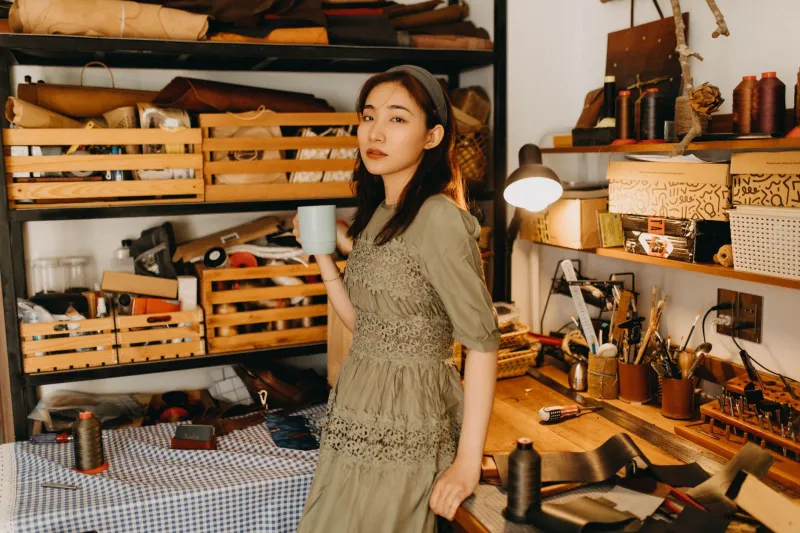
Most people treat a side hustle like a pressure valve — something to blow off steam, maybe pad the savings account a little. But spend any time in Asian American creative and entrepreneurial circles, and you start to notice a different energy. For a lot of folks here, the side project isn't a distraction from the main event. It is the main event, just running on a slower clock.
That shift is showing up everywhere: in Etsy shops selling hand-embroidered Vietnamese áo dài panels, in Substack newsletters breaking down Korean skincare ingredients for a curious American audience, in YouTube channels where second-generation Filipino Americans teach their parents' recipes to strangers who somehow feel like family. These aren't hobbyists killing time. These are people building something — deliberately, patiently, with one eye on the present and one eye on who comes after them.
The Weight of the "Safe" Path
To understand why this matters so much within the community, you have to understand what came before it. For decades, the dominant narrative handed to Asian American kids was pretty simple: pick a stable profession, work hard, don't make waves. Medicine, law, engineering, finance. The logic wasn't arbitrary — it was survival-coded, born from immigrant experiences where unpredictability was the enemy.
But that framework, as practical as it was, left a lot of creative and entrepreneurial energy without a legitimate outlet. You couldn't always tell your parents you wanted to open a ceramics studio or launch a streetwear label. So people did what people do — they found a way anyway. They kept the day job and built the dream on weekends.
What's changed now is the infrastructure around those weekend projects. E-commerce platforms, social media algorithms that reward niche content, creator monetization tools, print-on-demand services — all of it has dramatically lowered the barrier between "something I love doing" and "something that actually pays."
Cultural Preservation With a Business Plan
Here's the part that makes the Asian American side hustle story genuinely distinct: a huge chunk of these projects aren't just about money. They're about memory.
Take the wave of small-batch food producers popping up across cities like Houston, Los Angeles, and the Bay Area — people jarring their grandmother's kimchi recipe, bottling house-made Filipino vinegars, or selling handmade mochi in flavors that don't exist at any grocery store. These aren't just products. They're arguments. They're saying: this food matters, this tradition is worth preserving, and yes, someone will pay for it.
Same story plays out in craft. A Vietnamese American woodworker in Portland spent years refining joinery techniques he learned from his grandfather before launching a furniture line that now has a six-month waitlist. A Chinese American calligrapher in Brooklyn started teaching online workshops during the pandemic and ended up with students in twelve countries. The side hustle became a school. The school became a legacy.
When you frame it that way, the economics almost become secondary. The real product isn't the jar of chili crisp or the hand-lettered print — it's the proof that the culture has staying power in an American context.
Breaking the Single-Industry Trap
There's a practical side to all this that doesn't get talked about enough. Leaning hard into one industry — or one employer — is a vulnerability. The pandemic made that uncomfortably clear for a lot of people, but Asian American professionals have long been aware of it in a more specific way: the bamboo ceiling is real, and it tends to concentrate people in certain fields without guaranteeing advancement within them.
A side hustle, especially one that grows into a genuine revenue stream, changes the math. It creates options. It means your financial life isn't entirely dependent on whether your manager decides to promote you, or whether your industry contracts, or whether some algorithm decides your skills are suddenly obsolete.
More than a few people have made the full jump. A software engineer in Seattle who spent three years building a digital art practice on the side left his corporate job last year when his print shop hit consistent five-figure monthly revenue. A Bangladeshi American nurse practitioner in Chicago launched a wellness content platform targeting South Asian women and now earns more from brand partnerships than from her clinical shifts — though she hasn't quit yet, because, as she puts it, "my parents would actually pass away."
That line gets a laugh, but it also points to something real: the negotiation between honoring where you came from and betting on where you're going is ongoing. The side hustle often lives right in the middle of that tension.
Building for the Next Generation
Maybe the most interesting thing happening right now is the intentionality around legacy. Older millennials and Gen X Asian Americans who built side businesses over the last decade are starting to think about succession — not in a formal corporate sense, but in the way a family thinks about what gets passed down.
A Hmong American textile artist in Minnesota has started involving her teenage daughter in the business, teaching her both the weaving techniques and the Shopify backend. A Korean American couple in Atlanta who built a specialty tea import business on evenings and weekends for eight years have begun documenting every supplier relationship and sourcing trip, creating what they call "a map for whoever comes next."
This is generational wealth in a form that doesn't always make the financial headlines, but it's arguably more durable than a brokerage account. It's knowledge, craft, relationships, and reputation — the kind of assets that don't crash with the market.
The Xin Vàng Take
There's something fitting about a community that has always been told to work twice as hard deciding to work twice as wide instead. The side hustle, for Asian Americans building it into something real, isn't about grinding harder — it's about expanding the definition of what work can look like and what it can mean.
The passion project that started as a hobby, grew into a brand, and is slowly becoming something a whole family can stand behind? That's not extra. That's the whole point.
And honestly? That sounds a lot like gold.