Forget the Buffet: A New Wave of Asian Chefs Is Rewriting the Menu for America
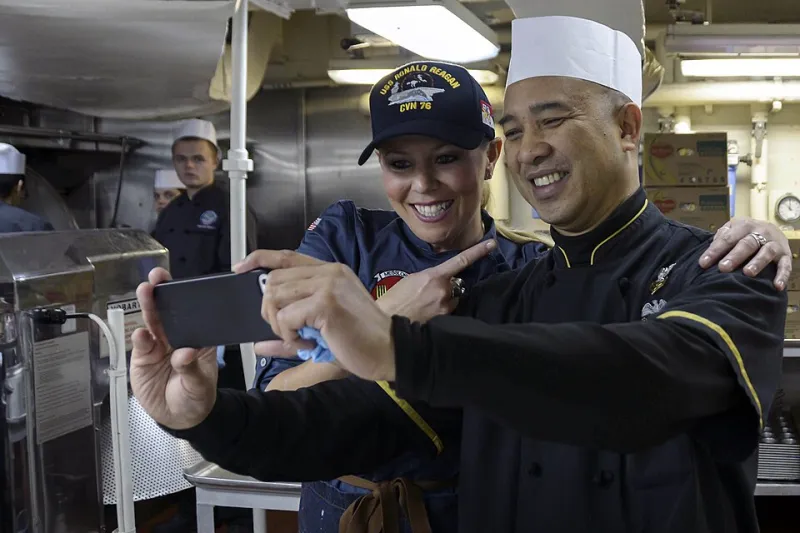
Photo: Official U.S. Navy Page from United States of America, Public domain, via Wikimedia Commons
For decades, 'Asian food' in America meant one of a handful of predictable things: the orange chicken combo plate, the all-you-can-eat sushi deal, the pan-Asian buffet with its sneeze guard and lukewarm lo mein. Not bad, necessarily. But not the whole story — not even close.
Something has been shifting in American cities over the last several years, quietly at first and now loudly enough that food critics, neighborhood regulars, and James Beard committees are all paying attention. A new generation of Asian restaurateurs and chefs is done with the watered-down version. They're opening spots that reflect where they actually come from — specific regions, specific memories, specific grandmothers — and American diners are showing up hungry for exactly that.
The 'Authenticity' Question (And Why It's Complicated)
Before we go further, let's acknowledge that 'authentic' is a loaded word in food conversations. Who decides what counts? And authentic to whom — the diaspora community, the home country, or some imagined original version that may not even exist anymore?
Chefs navigating this space tend to have a more nuanced take. 'I don't use the word authentic because it puts me in a box,' says Kevin Tong, who runs a Hunanese restaurant in Seattle that draws on his family's recipes from Changsha. 'What I make is personal. It's regional. It's honest. Whether that's authentic to someone else's experience of Hunan food, I can't control.'
That distinction — personal and regional versus generic and pan-Asian — is at the heart of what's driving this food revival. The chefs leading it aren't trying to represent 'Asian food' as a monolith. They're doing the opposite: drilling down into specificity and trusting that specificity is what makes food interesting.
Regional Depth Over Pan-Asian Breadth
Walk through certain neighborhoods in Houston, the Bay Area, or the DC suburbs right now and you'll find restaurants that would have been almost unimaginable a decade ago in terms of their specificity. Yunnan rice noodle shops. Cebuano lechon specialists. Hyderabadi biryani spots that serve only biryani, done exactly one way, and are booked out for weeks.
In Chicago's Avondale neighborhood, chef Mai Nguyen recently opened a spot dedicated exclusively to the cuisine of Hội An, the central Vietnamese coastal city where her family is from. No pho. No spring rolls (well, one, because people kept asking). Instead: cao lầu, a wheat noodle dish that's so tied to its place of origin that traditionalists argue it can only truly be made with water from specific local wells. 'I knew some people would walk in expecting something familiar and leave confused,' Mai says, laughing. 'But the people who got it — they got it completely. And they came back.'
That's the bet these chefs are making: that there's a real audience for depth, and that depth builds loyalty in a way that crowd-pleasing genericism never can.
Fusion Without Apology
Not everyone is going the strict regional route, and that's equally exciting. A parallel trend is chefs embracing fusion not as a compromise but as an honest reflection of their own hyphenated identities.
In Los Angeles, a Filipino American chef named Rico Santos runs a weekend pop-up where every dish is a collision of his Ilocano heritage and his years cooking in Mexican American kitchens across East LA. Think adobo braised into a taco filling, or sinanglaw — a bitter, offal-heavy Ilocano soup — reimagined with the smoky depth of a good birria. 'My food is what happened to my family when we landed in California,' Rico explains. 'It's not confused. It's just real.'
This kind of fusion — rooted in lived experience rather than marketing trends — is very different from the 'Asian fusion' of the 1990s that often meant throwing lemongrass into a vinaigrette and calling it a day. It's fusion with a point of view.
Food as Cultural Infrastructure
Here's the part that goes beyond just good eating: these restaurants are functioning as community anchors in a way that's genuinely meaningful.
In cities where anti-Asian hate incidents spiked during and after the pandemic, Asian-owned restaurants became gathering points — places where communities could show up for each other literally and symbolically. Buying from a family-run Burmese spot in your neighborhood wasn't just dinner. It was a statement.
Chef Cindy Chen, who owns a Shanghainese dumpling house in Philadelphia's Chinatown, describes her restaurant as 'a living room that happens to have a commercial kitchen.' She hosts Lunar New Year celebrations that draw hundreds of people, offers free cooking classes to elderly community members who live alone, and keeps a standing policy of never turning away a regular who's having a hard month financially. 'The food brings people in,' she says. 'But the community is why they stay.'
This is what food scholars sometimes call 'culinary citizenship' — the way that cooking and eating together creates belonging, especially for communities that have historically had to fight for their place in the American story.
What's Actually Trending Right Now
For the curious and the hungry, here's a quick pulse check on what's popping in Asian food across the US:
- Mala everything. The numbing, tingly heat of Sichuan peppercorns has officially crossed over from niche to mainstream. Mala hot pot, mala popcorn, mala ramen — it's showing up everywhere from food halls to gas station snack aisles.
- Filipino food, finally. It's been 'the next big thing' for years, but it genuinely seems to be arriving now. Kamayan-style communal feasts, ube in unexpected places, and sisig on menus from Brooklyn to Austin.
- Southeast Asian breakfast culture. Congee spots, kaya toast cafes, and Vietnamese bánh mì breakfast sandwiches are reframing what morning food can look like.
- Korean snack bars and pojangmacha-style spots. The vibe of a late-night Korean street food stall — tteokbokki, fish cakes, soju — is finding a home in American bar culture.
Why This Moment Matters
Food has always been one of the most immediate ways that cultures communicate across difference. You don't need to share a language to share a meal. But there's something especially significant happening right now, when Asian American chefs are choosing to tell their specific stories through food rather than flattening those stories for easier consumption.
It's a form of cultural confidence — a willingness to say: this is who we are, this is where we come from, and you don't have to fully understand it to appreciate it. Come hungry. We'll handle the rest.
At Xin Vàng, we love this moment. Because the best food, like the best culture, doesn't ask you to meet it halfway. It pulls you all the way in.