Not Harvard or Bust: The Asian American Parents Who Are Quietly Changing What 'Making It' Looks Like
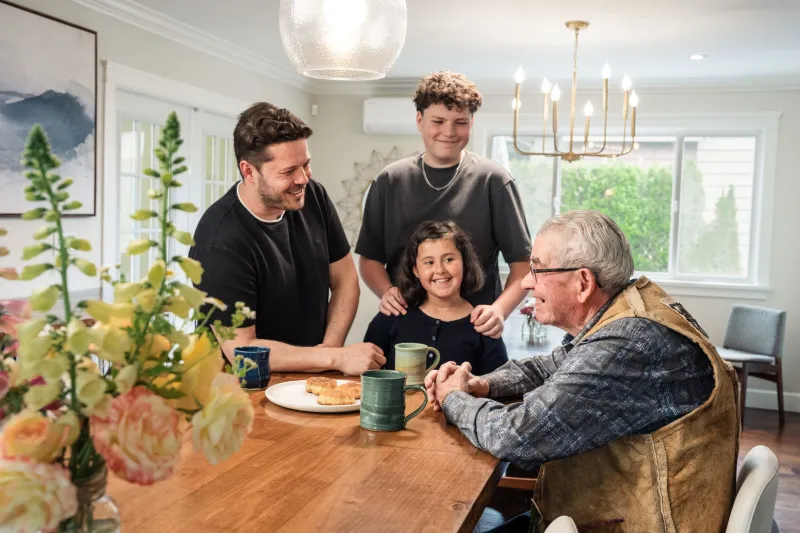
For a long time, the script was practically written before the kid was born. Get into a top school. Study medicine, law, or engineering. Become the proof that your family's sacrifice was worth it. In many Asian American households across the US, that playbook wasn't just a preference — it was survival logic passed down through immigration, hardship, and the very real pressure of building something from nothing in a country that didn't always roll out the welcome mat.
But something is shifting. Quietly, in living rooms from San Jose to Queens, a different kind of conversation is starting to happen.
The Pressure Cooker, Examined
Let's be honest about where this came from. The obsession with elite universities in many Asian American communities wasn't arbitrary — it was deeply rational. For first-generation immigrants who faced language barriers, discrimination, and limited networks, credentials were currency. A degree from a recognizable school opened doors that charm or connections couldn't. Pushing kids hard wasn't cruelty; it was strategy.
But the world those strategies were built for has changed. And a growing number of Asian American parents — many of them second-generation themselves — are noticing the gap between what the old playbook promised and what it's actually delivering.
"My parents came here with two suitcases and a biology degree," says Linda Tran, a 41-year-old Vietnamese American mom in Houston whose daughter recently chose a design program at a state school over a pre-med track at a more prestigious university. "They worked so hard so I wouldn't have to struggle like they did. But when I watched my daughter cry every Sunday night from anxiety in high school, I had to ask myself — is this the version of 'not struggling' we actually wanted?"
When the Trophy Starts to Feel Empty
The data on Asian American student mental health has been hard to ignore. Studies consistently show elevated rates of anxiety and depression among high-achieving Asian American teens, often tied to academic pressure and the fear of disappointing family. Some researchers have called it a quiet crisis hiding behind a model minority myth that, in many ways, has never done this community any favors.
For parents who lived through their own version of that pressure, watching it replay in their children is prompting some real soul-searching.
David and Michelle Park, a Korean American couple in the Chicago suburbs, watched their son burn out spectacularly during his junior year of high school — a kid who'd been on the honor roll since fifth grade. "He just stopped," David says. "Not rebelliously. He just... deflated. And we realized we had optimized for everything except his actual wellbeing."
Their son eventually enrolled at a smaller liberal arts college, found a passion for urban planning, and is now working on a city housing project in Minneapolis. "Is it what we imagined? No," Michelle admits. "Is he thriving? Absolutely. Those two things being different was something we had to learn to sit with."
The New Metrics
So what does success look like when you take the Ivy League logo off the vision board?
For a lot of families, it's getting more specific — and more human. Mental health is showing up as a genuine priority rather than an afterthought. Entrepreneurship, once viewed with suspicion by parents who wanted their kids in stable, respectable careers, is increasingly being celebrated. Creative pursuits that were once treated as hobbies are being recognized as legitimate paths.
Jasmine Nguyen, a 38-year-old mom in Orange County, California, says her perspective flipped when she watched her niece's art career take off while her own son struggled through a pre-law track he had zero interest in. "I grew up hearing that being an artist was code for being broke. But I've watched that change. My son is now studying film. I won't lie — I had to grieve the doctor version of him. But I'm done grieving."
This shift isn't just anecdotal. There's a broader cultural moment happening where Asian American identity is being reclaimed and expanded — in media, in entrepreneurship, in politics. The idea that there's only one respectable shape for an Asian American life is getting harder to sell to a generation that has grown up watching Asian creatives, founders, and athletes rewrite what visibility looks like.
The Generational Conversation Nobody's Having Enough
Here's the complicated part: not everyone in the family is on the same page.
Grandparents who sacrificed enormously to get their families to America often hold tightly to the old markers of success — and understandably so. That tension between generations is real, and it plays out in awkward holiday dinners and loaded phone calls and the exhausting work of trying to honor where you came from while building something new.
Therapists who work with Asian American families say the most productive thing parents can do is name the tension out loud rather than pretend it doesn't exist. "A lot of these families are carrying stories that were never fully told," says one family counselor who works primarily with Asian American clients in the Bay Area. "When parents can say, 'Here's why our family valued what it valued, and here's where I'm choosing to do something different,' kids feel seen rather than just managed."
That kind of transparency doesn't come naturally in cultures where emotional directness wasn't always modeled. But more families seem to be trying.
What This Means Going Forward
None of this means Asian American parents are abandoning ambition. Far from it. The drive, the work ethic, the long-game thinking — those aren't going anywhere, and most families wouldn't want them to. What's changing is the definition of the destination.
More parents are asking: ambitious toward what, exactly? A salary number? A title? A life their kid actually wants to wake up to?
The answer, increasingly, is all of the above — and on terms that leave room for joy, mental health, and a sense of self that doesn't collapse the moment a rejection letter arrives.
For families still in the thick of it — the SAT prep, the extracurricular stacking, the college visit road trips — that reframe isn't always easy. But the parents who've come out the other side say the same thing: the conversation you're afraid to have with your kid is usually the one that matters most.
Golden doesn't have to mean gilded. Sometimes it just means real.