Mic Drop Moment: How Asian Americans Turned Karaoke Into America's Hottest Night Out
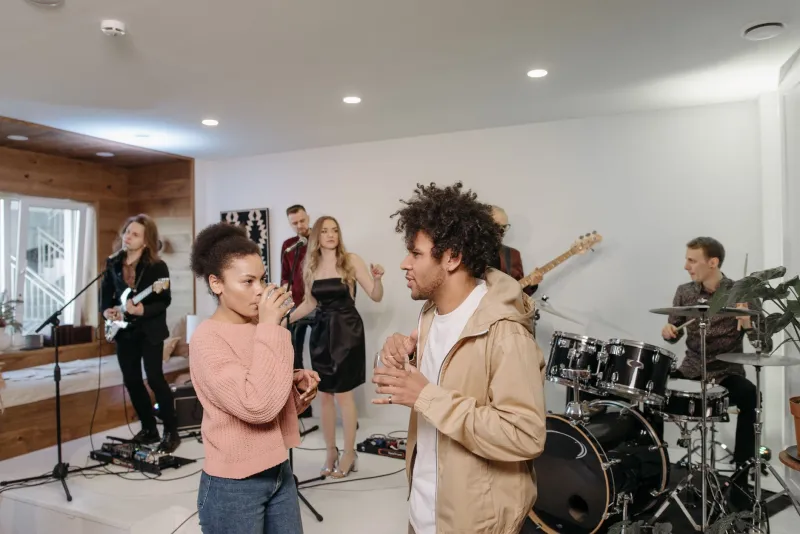
There's a moment that happens in every karaoke room — that split second after someone finishes a song, cheeks flushed, microphone still warm in their hand, waiting for the reaction. In cities like Los Angeles, Houston, New York, and Seattle, that moment is happening thousands of times a night. And more often than not, the person holding that mic has roots that trace back somewhere across the Pacific.
Karaoke has officially had its glow-up in America. But for many Asian Americans, this isn't a trend — it's just Tuesday.
From Basement Rooms to Booked-Out Venues
For decades, karaoke in the US lived in a specific kind of space: dimly lit rooms in Koreatown, tucked-away lounges in Vietnamese strip malls, or the occasional Japanese izakaya with a songbook thicker than a phone directory. These spots were beloved, but they weren't exactly on the radar of mainstream entertainment culture.
That's changed fast. Private karaoke room bookings — the kind where you rent a room with your crew instead of singing in front of strangers at a bar — have surged nationwide. Venues like Melody Karaoke in Los Angeles and Sing Sing in New York have waitlists on weekends. New spots are opening in cities like Atlanta, Austin, and Denver, markets that barely had a karaoke scene five years ago.
"We used to think we were serving one community," says Jenny Park, who co-owns a karaoke lounge in Koreatown, Los Angeles. "Now I look out on a Friday night and it's everybody. Korean American families, college kids from USC, bachelorette parties, corporate groups. The room doesn't care where you're from — it just wants you to sing."
The private room format — known as norebang in Korean — is widely credited as the gateway that made karaoke more accessible to Americans who felt anxious about performing in public. Instead of stepping up to a stage in front of a bar full of strangers, you're in a cozy room with your friends, bad notes and all. Asian Americans have known this for years. The rest of the country is just now catching on.
It's Not Just Singing — It's Community
Ask anyone who grew up in an Asian American household and they'll tell you: karaoke wasn't just entertainment. It was how families stayed connected. Grandparents sang ballads from their home countries. Parents belted out '80s pop. Kids learned the words to songs they'd never heard on the radio. The karaoke machine was a cultural bridge.
"My mom's English isn't perfect, but she knows every word to 'My Heart Will Go On,'" says David Nguyen, a 28-year-old marketing professional in Houston. "When we do karaoke, it doesn't matter that we grew up in different worlds. We're just in that room together, being ridiculous."
That sense of shared joy has real mental health value, and researchers are starting to pay attention. Studies on communal singing have consistently shown benefits for mood, stress reduction, and social bonding. For immigrant communities and their children — who often navigate the exhausting work of code-switching between cultures — having a space that's genuinely joyful and judgment-free carries extra weight.
Cultural analyst and sociologist Dr. Michelle Tran, who studies diaspora communities at UC San Diego, puts it plainly: "Karaoke functions as a kind of cultural third space. It's not home, it's not work — it's somewhere you get to just be. For a lot of Asian Americans, that space has always been precious."
The Business of Belting
Venue owners across the country are scrambling to keep up with demand. The karaoke industry in the US — valued at around $500 million and climbing — is being reshaped by operators who understand what the Asian American community built and are scaling it up.
Technology is a big part of the upgrade. Modern karaoke systems now integrate streaming platforms, allowing venues to pull from catalogs of tens of thousands of songs in real time. Lyrics are sharper, sound systems are actually good now, and some venues offer tablet-based song selection that would make the old spiral-bound songbooks look like relics.
But the smart operators know that tech alone doesn't explain the draw. "People want the vibe," says Marcus Lee, who opened a karaoke bar in Atlanta's Old Fourth Ward in 2022. "They want the rooms to feel special. Good lighting, good drinks, a playlist that goes from K-pop to Beyoncé without missing a beat. Asian American customers taught us what that looks like. We just brought it to a new neighborhood."
The K-pop wave deserves its own mention here. As groups like BTS, BLACKPINK, and NewJeans have pulled millions of non-Korean fans into deep fandom, those same fans have developed a genuine appetite for karaoke as part of the experience. Singing along to your favorite K-pop song in a private room with your friends isn't just fun — it's a ritual. It's devotional, almost.
Singing Through the Noise
There's something quietly radical about what's happening here. In a cultural moment that often feels exhausting and polarized, karaoke offers something almost embarrassingly simple: a room, a mic, and permission to be bad at something in front of people you trust.
For Asian Americans, that's always been the point. The culture was never about being the best singer in the room. It was about showing up, taking your turn, and cheering when someone else nailed their chorus.
As Jenny Park closes up her lounge on a Saturday night, she watches the last group of the evening stumble out singing off-key into the parking lot. She laughs. "This is what it was always supposed to be," she says. "Loud, a little messy, and full of people having the best time of their week."
America, welcome to the party. Asian Americans saved you a spot at the mic.