Press Start: The Asian Game Studios Quietly Taking Over Your Screen
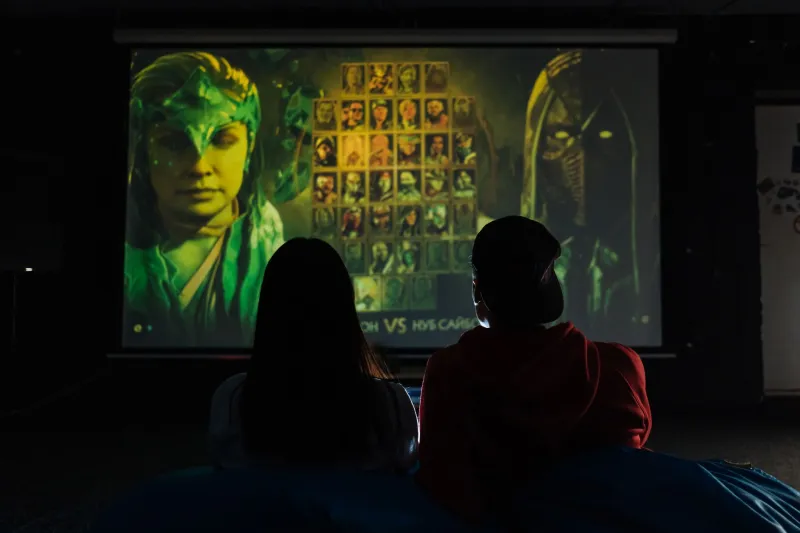
If you've spent any time on gaming Twitter, Discord, or Reddit in the last few years, you've probably noticed something: the games everyone is losing their minds over — the ones inspiring fan art, cosplay, 40-hour YouTube essays, and genuine emotional breakdowns — are increasingly coming out of studios in Japan, South Korea, China, and across Southeast Asia.
This isn't a coincidence. It's a shift.
The Numbers Don't Lie
Let's start with the obvious. Elden Ring, developed by FromSoftware in Tokyo, sold over 20 million copies worldwide and spent months dominating gaming discourse. Genshin Impact, made by Shanghai-based miHoYo, has reportedly generated over $4 billion in revenue — from a free-to-play game. PUBG, built by Krafton in South Korea, essentially invented a genre that reshaped how the entire industry thinks about multiplayer design. Honkai: Star Rail launched to massive global numbers. Black Myth: Wukong broke Steam records on day one in 2024, becoming one of the fastest-selling games in history.
These aren't niche titles finding cult audiences. These are mainstream, category-defining hits built outside of the traditional Western gaming hubs of California and the UK.
"What we're seeing is the result of decades of creative development finally reaching global audiences at scale," says Kevin Zhao, a games industry analyst based in San Francisco. "Asian studios have always been technically excellent. What's changed is the infrastructure — better global publishing, social media, streaming — that lets a game from Chengdu reach a kid in Ohio on launch day."
Mythology as Superpower
One of the most interesting things about the biggest Asian-developed titles is how unapologetically they draw from their own cultural wells. Black Myth: Wukong is built entirely around the Journey to the West, one of the foundational texts of Chinese literature. Ghost of Tsushima — developed by Sucker Punch but soaked in Japanese historical aesthetics — became a love letter to samurai cinema that Japanese players themselves embraced. FromSoftware's entire catalog breathes with the aesthetic DNA of Japanese folklore, Buddhism, and architecture.
For Asian American players, this has been quietly meaningful in ways that are hard to overstate.
"I grew up playing games where I never saw anything that looked like my culture," says Priya Mehta, a 24-year-old graphic designer in Chicago who has been gaming since she was eight. "Now I'm playing games where the mythology, the art direction, the music feels like it's coming from somewhere I recognize. That's not a small thing."
But the reach goes far beyond Asian diaspora communities. Non-Asian players are diving deep into these games and, in the process, developing genuine curiosity about the cultures behind them. Fan communities are full of people researching Chinese mythology, Japanese history, and Korean folklore because a game made them care.
K-Gaming and the Competitive Explosion
South Korea's influence on gaming deserves its own spotlight. The country essentially invented modern esports culture — professional leagues, stadium events, players with celebrity status — long before the West caught up. Games like League of Legends (developed by Riot Games but deeply shaped by Korean competitive culture) and StarCraft built infrastructure for competitive gaming that the global industry still runs on.
Korean gaming culture has also shaped how people talk about games. Terms, strategies, and training philosophies that originated in Korean PC bang culture have become standard vocabulary in global gaming communities. The dedication, the discipline, the respect for craft — those values traveled with the games.
"Korean esports didn't just export players," says James Kim, who covers the esports industry for a gaming publication in Los Angeles. "It exported a whole philosophy about what competitive gaming could be. That influenced everything."
Gacha, Anime, and the Blurred Lines
Another dimension of this story is the way Asian games have blurred the line between gaming, anime, and social media culture. Titles like Genshin Impact, Fate/Grand Order, and Arknights operate as living entertainment universes — characters get birthdays, voice actors become celebrities, fan communities produce art, music, and fiction at a staggering volume.
This model — sometimes called the "gacha" ecosystem — is enormously influential on how Western studios now think about live service games and player engagement. It's not just about playing a game; it's about belonging to it.
For younger Asian American players especially, these communities have become social spaces with real meaning. "My friends and I bonded over Genshin the way people used to bond over a TV show," says Tyler Nguyen, a college student in San Jose. "We have group chats, we theorize about the lore, we celebrate when new characters drop. It's a whole thing."
What Comes Next
The momentum isn't slowing. More Asian studios are investing in global releases, more publishers are building pipelines that connect Asian development talent to worldwide markets, and more players — regardless of background — are hungry for stories and worlds that feel different from what they've played before.
For Asian American communities, watching this happen carries a particular kind of satisfaction. The culture that shaped so many childhoods — the manga, the anime, the hours in arcades, the games brought over from relatives visiting from abroad — is now genuinely, undeniably at the center of global entertainment.
The controller has changed hands. And honestly? The games have never been better.