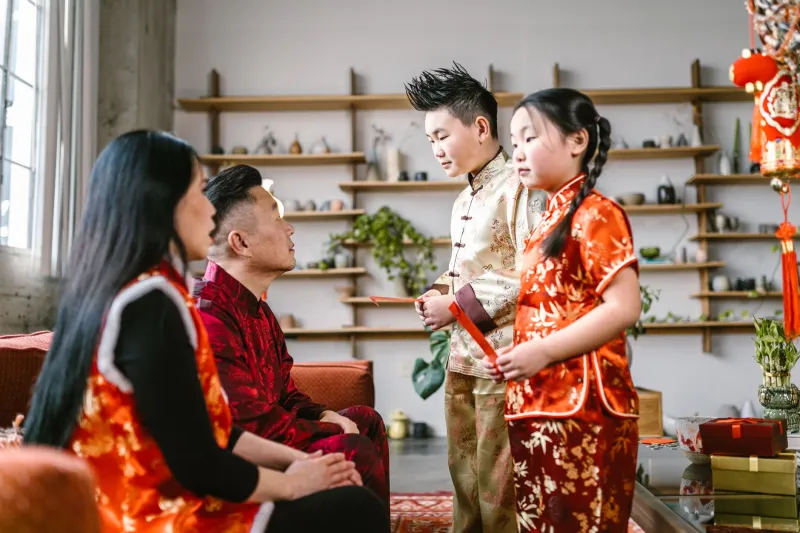
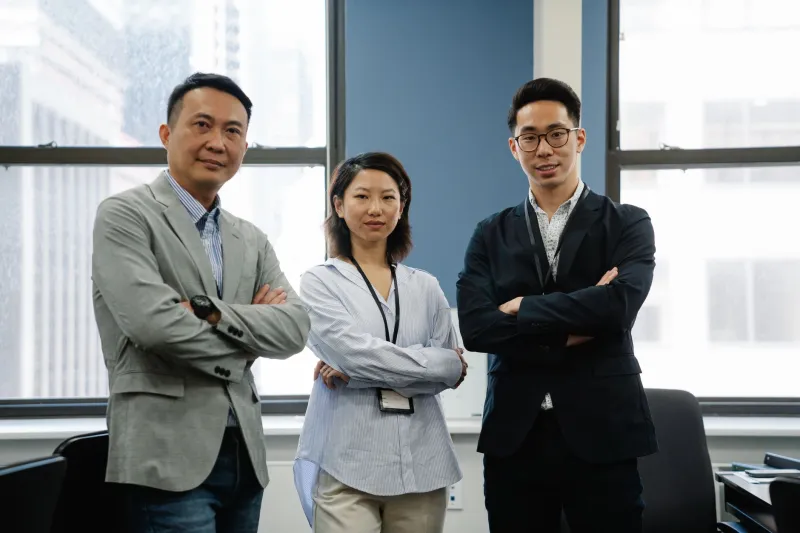
Forget 9-to-5: Asian Americans Are Working With Their Bodies — Not Against Them
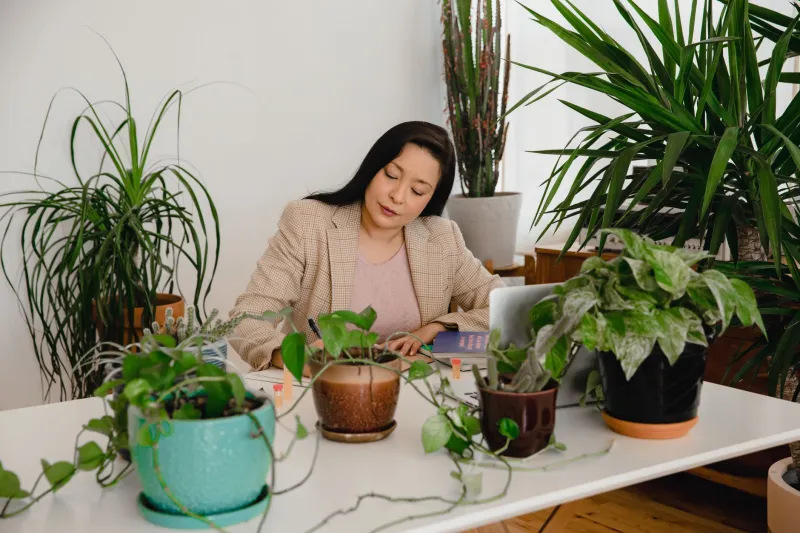
Somewhere between the third cup of cold brew and the fourth Zoom call of the morning, a lot of us have had the same quiet thought: this can't be right. The standard American workday — rigid, relentless, and built around a factory-era clock — has never really fit everyone. And for a growing wave of Asian American professionals, the solution isn't a better planner or a fancier productivity app. It's something a lot older.
They're looking to their roots.
The Clock Your Grandmother Already Knew
In many Asian cultural traditions, time isn't just a neutral container you pour tasks into. It carries weight. The concept of shíchen in Chinese cosmology divides the day into twelve two-hour blocks, each associated with specific organs, energies, and types of mental activity. Traditional Ayurvedic medicine — practiced across South Asia for thousands of years — maps the day into doshas that shift with the sun. Vietnamese farming communities historically structured rest, planting, and labor around lunar calendars that tracked not just seasons but subtle energetic rhythms.
These weren't superstitions. They were, in many ways, early frameworks for what we now call chronobiology — the science of how your body's internal clock shapes everything from hormone levels to cognitive sharpness.
Jessica Huang, a freelance UX designer based in the Bay Area, grew up watching her Taiwanese grandmother refuse to start any significant task before 9 a.m. — not because she was lazy, but because she believed the early morning hours belonged to the body, not the mind. "She called it yang sheng time," Jessica says. "Nourishing life. You don't grind during that window. You prepare."
Jessica spent her twenties ignoring that lesson entirely. Now, at 34, she's built her entire work schedule around it.
What 'Golden Hour' Actually Means
The phrase golden hour gets thrown around a lot — photographers use it, doctors use it, Instagram influencers definitely overuse it. But in the context of productivity, Asian Americans are reclaiming it as something more personal and more precise.
For some, it's literal: the two to three hours in the late morning when sunlight, alertness, and creative energy align. For others, it's metaphorical — a state of flow that has to be earned through the right kind of morning, not forced by a calendar invite.
Derrick Lim, a Korean American entrepreneur who runs a digital marketing agency in Atlanta, started experimenting with what he calls "lunar scheduling" after burning out spectacularly in 2021. "I was doing everything right by American hustle culture standards," he says. "Early mornings, late nights, grind mentality. And I completely fell apart."
His reset came partly from therapy, but also from his mother, who mailed him a Korean almanac and told him, half-joking, to start paying attention to the moon. He did. What he found — cross-referencing traditional Korean jeol seasonal markers with his own tracked energy levels — was that his creative output was genuinely better during certain two-week windows of the lunar month. His focus sharpened. His writing flowed. His pitches landed.
"I'm not saying the moon controls me," Derrick laughs. "I'm saying that paying attention to natural cycles instead of ignoring them completely changed how I work."
The Science Isn't as Far Behind as You'd Think
Here's the thing: mainstream productivity research is slowly catching up to what these traditions have suggested for centuries. Chronobiology studies consistently show that cognitive performance, memory consolidation, and creative problem-solving peak at different times for different people — and that forcing everyone into the same schedule creates real biological friction.
A 2022 study published in Nature Communications confirmed that individual circadian rhythms vary significantly, and that working against your natural peak hours increases cortisol levels and reduces output quality. Evening-type people — often labeled "lazy" in a culture that worships early risers — may actually be operating at a neurological disadvantage when forced into early-morning productivity windows.
For Asian American professionals already navigating workplace cultures that weren't designed with them in mind, this research lands differently. It's validation that the discomfort wasn't just in their heads.
"I spent years thinking I was the problem," says Priya Nair, a South Indian American attorney in Chicago. "I'm sharpest between 10 a.m. and 1 p.m., and then again after 4. But law firm culture demands you're visibly grinding at 7 a.m. or you're not serious." After making partner, she's quietly restructured her day. Client calls in the morning. Deep work — briefs, strategy, research — in her confirmed peak windows. "My output is better. My billing hours are actually down, and my results are better. That tells you something."
Rejecting the Hustle Without Rejecting Ambition
It's worth being clear about what this movement isn't. It's not about working less or opting out of professional life. The Asian Americans rethinking their schedules are, by and large, deeply ambitious people who want to do excellent work. The shift is about how that work gets done — and whose framework gets to define it.
For a community that has long been pressured to assimilate, to be invisible, to out-perform Western peers on Western terms, there's something quietly radical about saying: actually, my grandmother's way of understanding time has something to offer here.
That reclamation shows up in small, practical ways. A Vietnamese American product manager in Seattle who blocks her calendar according to the lunar calendar's "favorable" and "rest" days. A Japanese American therapist in New York who structures her session load around the traditional concept of ma — productive pause — building deliberate empty space into her week. A Chinese American startup founder in Austin who starts every Monday by consulting a digital version of the traditional almanac, not as a superstition, but as a prompt to think intentionally about timing.
None of them would call themselves mystical. All of them would call themselves more effective.
Your Own Golden Hour Is Out There
The irony is that the tools to find your personal peak — wearables, sleep trackers, mood journals, focus apps — have never been more accessible. But the cultural permission to actually use that data to reshape your workday? That's still catching up.
For Asian Americans, the invitation is to trust a wisdom that was always already there. Not to romanticize tradition for its own sake, but to recognize that centuries of observation about human energy, seasonal rhythm, and sustainable effort didn't survive this long by accident.
The 9-to-5 was built for a different era, a different workforce, and honestly — a different body type of worker than most of us. Finding your golden hour isn't about being precious with your time. It's about finally working with yourself instead of constantly working against yourself.
Your grandmother probably already knew when that window was. It might be worth asking.