Grandma Knows Best: How Asian Elders Became the Wellness Gurus Millennials Actually Trust
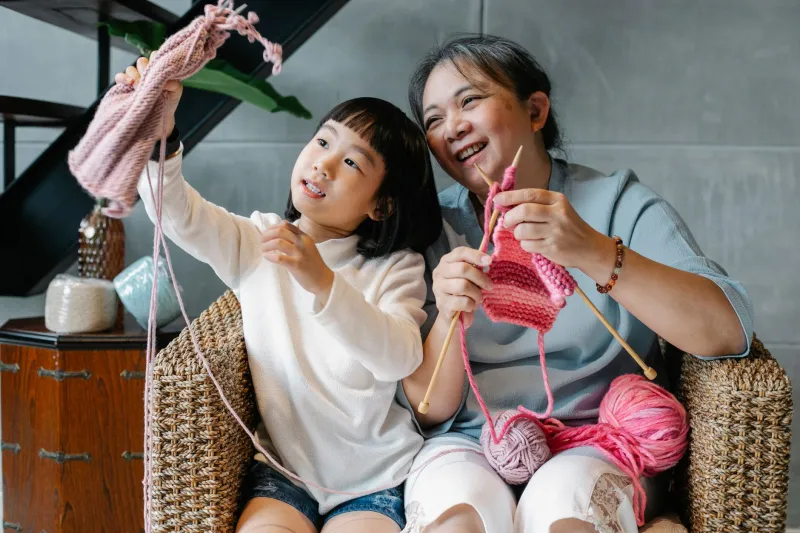
There's a particular kind of authority that no wellness app can replicate. It lives in the hands of a 78-year-old Vietnamese grandmother who has been making gừng (ginger) tea since before your parents were born, or in the quiet confidence of a Korean halmoni who swears by fermented vegetables and early morning walks as her personal longevity strategy. For a growing number of Asian American millennials — and honestly, plenty of non-Asian ones too — that authority is starting to feel a lot more trustworthy than whatever supplement stack is trending on TikTok this week.
We're watching a genuine cultural reversal unfold in real time. After years of younger generations dismissing family health traditions as old-fashioned or unscientific, something has shifted. The $4.5 trillion global wellness industry, for all its innovation, has left a lot of people feeling overwhelmed, overcharged, and under-served. And into that gap? Grandma has stepped in, completely unbothered.
The Backlash Against Mainstream Wellness
Let's be real about what mainstream wellness culture has become. It's expensive, it's often exclusionary, and it has a complicated history of repackaging non-Western traditions — stripping them of context, slapping a minimalist label on them, and marking them up 400 percent. Millennials, who came of age watching this happen in real time, are increasingly skeptical.
At the same time, the pandemic forced a lot of Asian American families into closer quarters, and something unexpected happened: actual conversations. Grandparents who had always offered health advice started getting listened to. Grandchildren who had always half-tuned it out started asking follow-up questions.
"My grandmother has been telling me to drink chrysanthemum tea when I'm stressed since I was a kid," says Mei, a 29-year-old graphic designer in Los Angeles. "I used to roll my eyes. Then I looked it up and found out chrysanthemum has actual anti-inflammatory properties. Now I make it every Sunday."
That pattern — dismissal, then curiosity, then validation — is playing out across communities from Houston's Chinatown to the Vietnamese enclaves of San Jose.
What the Science Is Actually Saying
Here's where it gets interesting. A lot of what Asian grandmothers have been prescribing for generations is now being studied seriously by researchers, and the results are genuinely compelling.
Turmeric, long used in South and Southeast Asian cooking and home remedies, contains curcumin — a compound with documented anti-inflammatory effects that has been the subject of hundreds of peer-reviewed studies. Ginger has demonstrated efficacy in managing nausea and reducing muscle soreness. Fermented foods like kimchi and miso are now central to mainstream conversations about gut health and the microbiome. Even the concept of "eating warm foods" — a cornerstone of traditional Chinese medicine that Western nutritionists once dismissed — is being revisited through the lens of digestive health research.
None of this means every folk remedy is a miracle cure. But it does mean that the dismissive attitude many Western-trained practitioners once had toward these traditions is softening. And for younger Asian Americans, that scientific validation feels like permission to take what their elders already knew seriously.
It's Not Just Physical
What makes this movement genuinely different from the usual wellness cycle is that it isn't only about physical health. Asian grandmother wisdom tends to be holistic in the truest sense of the word — it weaves together food, rest, emotional regulation, community, and ritual in ways that modern wellness culture often struggles to replicate.
Take the concept of "not letting the cold in" — a phrase heard across Vietnamese, Chinese, Korean, and Filipino households alike. On the surface, it's advice about wearing socks and avoiding drafts. But underneath, it's a whole philosophy about protecting the body as a precious system, about being attentive to small signals before they become big problems. It's preventative care, delivered through metaphor.
Or consider the emotional resilience practices embedded in something as simple as how a grandmother handles grief. The quiet rituals of preparing food for others, the insistence on maintaining routine, the communal processing of hardship — these aren't just cultural quirks. They reflect deeply practical approaches to mental health that align with what therapists now call behavioral activation and community-based coping.
"My lola never went to therapy a day in her life, but she understood that you don't heal alone," says Jasmine, a 32-year-old nurse in Chicago whose Filipino grandmother recently moved in with her family. "She cooks for neighbors when they're going through something hard. She prays with them. She shows up. That's her wellness practice."
The Intergenerational Exchange Going Both Ways
What's beautiful about this moment is that it isn't a one-way download. Younger Asian Americans aren't just passively receiving grandmother wisdom — they're actively documenting it, sharing it, and in some cases, bringing it to wider audiences.
On YouTube and Instagram, creators are filming their grandmothers making traditional herbal preparations, explaining the logic behind food combinations, and teaching breathing and movement practices rooted in traditions like qi gong and yoga. These videos routinely pull millions of views, and the comment sections are full of people from every background saying some version of "I needed this."
In return, some grandmothers are learning new things from their grandchildren — about how to articulate their knowledge in ways that resonate with people outside their communities, about the research that validates what they've always done, about the fact that people beyond their own families want to listen.
It's a genuine exchange, and it's producing something new: a kind of hybrid wellness literacy that respects tradition without being rigid about it.
Why This Matters Beyond the Trend Cycle
Wellness trends come and go — that's basically the entire industry's business model. But this particular shift feels like it has more staying power, because it's rooted in something the trend cycle can't manufacture: genuine relationship and lived experience.
Grandmothers aren't selling anything. They don't have affiliate links. They're not optimizing for engagement. They're just passing down what worked, what helped, what sustained families across generations and across oceans. In a wellness landscape that can feel deeply transactional, that kind of knowledge carries a different weight.
For Asian American communities specifically, this moment is also about cultural reclamation. It's about recognizing that the traditions their families brought to this country weren't just quaint customs to be assimilated away — they were sophisticated, tested systems of care that deserve to be honored and preserved.
So the next time your grandmother tells you to put ginger in everything, maybe don't reach for your phone to fact-check her. Maybe just make the tea. She's probably been right about more than you've given her credit for.