What Main Street Keeps Getting Wrong — and What Lunar New Year Street Fairs Have Figured Out
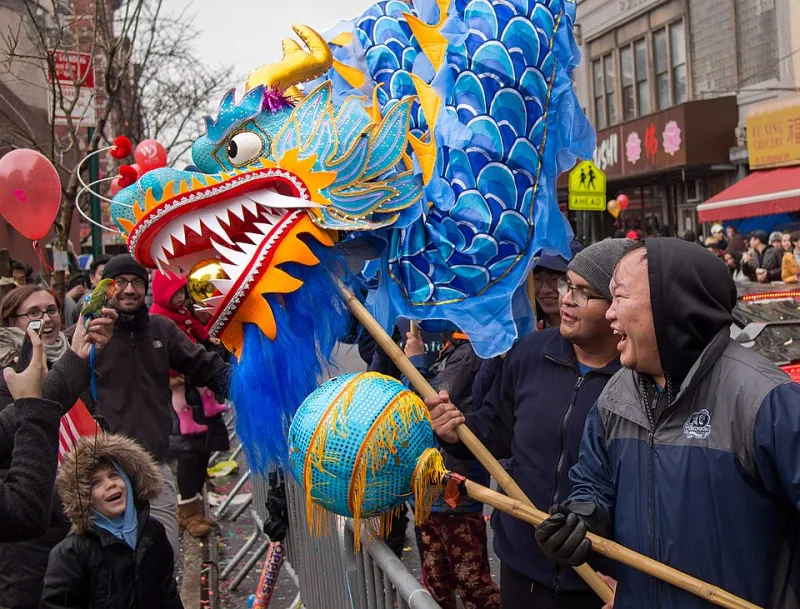
Photo: Rhododendrites, CC BY-SA 4.0, via Wikimedia Commons
Here's an uncomfortable fact for anyone who sits on a chamber of commerce: while plenty of American downtowns are brainstorming ways to get people to show up, a lot of Asian cultural festivals solved that problem years ago. Lunar New Year street fairs in places like Houston's Bellaire corridor, Seattle's Chinatown-International District, and — perhaps surprisingly — small cities in Georgia and Minnesota regularly pull crowds that local retailers haven't seen since the mall era.
This isn't luck. It's a repeatable model. And other communities are starting to borrow it.
The Model in Three Moves
Talk to organizers and city planners, and the playbook boils down to three things that conventional Main Street revitalization tends to get wrong.
First: anchor the calendar, don't chase it. Most towns run scattered events year-round and wonder why none build momentum. Lunar New Year works because it's a fixed date with built-in meaning. People don't decide to attend — they expect to attend. Planner Rosa Delgado, who consulted on a midwestern city's night market pilot, puts it plainly: "One event people plan their February around beats twelve events nobody remembers."
Second: make vendors the point, not the garnish. At a strong festival, small vendors aren't entertainment between attractions — they are the attraction. And critically, the barrier to entry is low. A home cook with a folding table and a permit can test a business idea in front of 10,000 people. Several full-time restaurant owners in Southern California trace their start to exactly that setup. The festival functions as a low-risk incubator, which is more than most economic development programs can claim.
Third: treat culture as the draw, not a theme. The difference between a street fair and a street fair with lion dancers is the difference between a shopping trip and an event. Communities that import the aesthetics of these festivals without the substance — the same towns that slap lanterns on a generic food truck rally — tend to fizzle. The organizers who succeed are embedded in the tradition, not decorating with it.
The Numbers Other Towns Are Noticing
The receipts are hard to ignore. Major Lunar New Year events routinely generate six-figure sales weekends for surrounding businesses, and the spillover is measurable: restaurants near festival zones report their best days of the quarter, and some cities have started scheduling other programming deliberately adjacent to festival dates to catch the traffic.
Small cities are paying attention. At least a handful of mid-sized American towns have launched night markets modeled directly on Asian counterparts, some explicitly recruiting first- and second-generation vendors as anchors.
The Honest Caveat
None of this is effortless, and it's worth saying what the success stories have in common beyond culture: year-round relationships between organizers and city hall, sane permitting, and genuine vendor profit — not just vendor presence. Festivals that squeeze vendors with steep fees or chaotic logistics burn out their own engine within a couple of seasons.
There's also the authenticity question. A borrowed festival can slide into costume quickly. The communities doing this well treat the event as an expression of a real, resident community — which is also why those communities tend to keep showing up after the cameras leave.
What Main Street Should Actually Steal
If there's one transferable lesson, it's this: economic revival follows belonging, not the other way around. Lunar New Year fairs don't work because of foot traffic strategy. They work because people feel ownership over them — as attendees, vendors, volunteers, and neighbors.
Main Street America doesn't need a dragon dance to copy that. It needs to build something people feel is theirs — and then get out of the way while they fill the street.