Old Hands, New Markets: The Asian American Makers Turning Ancestral Crafts Into Modern Empires
There's a scene that keeps repeating itself across cities like Los Angeles, New York, and Seattle: a young Asian American artist hunched over a workbench, hands stained with natural dye or dusted in clay, a laptop open nearby with a Shopify dashboard glowing on the screen. One foot planted in the past, one foot planted firmly in right now.
This is the remix generation — makers who grew up watching grandparents fold paper, weave silk, or brush ink across rice paper, and who decided that those skills weren't relics. They were raw material.
And the market is listening.
Where Tradition Meets the Algorithm
For a long time, the cultural narrative around Asian heritage crafts in America was pretty limited. You'd see it framed as either a museum piece — something to preserve behind glass — or a nostalgic hobby practiced in someone's back room. What you didn't often see was someone building a six-figure business out of it.
That's changing fast.
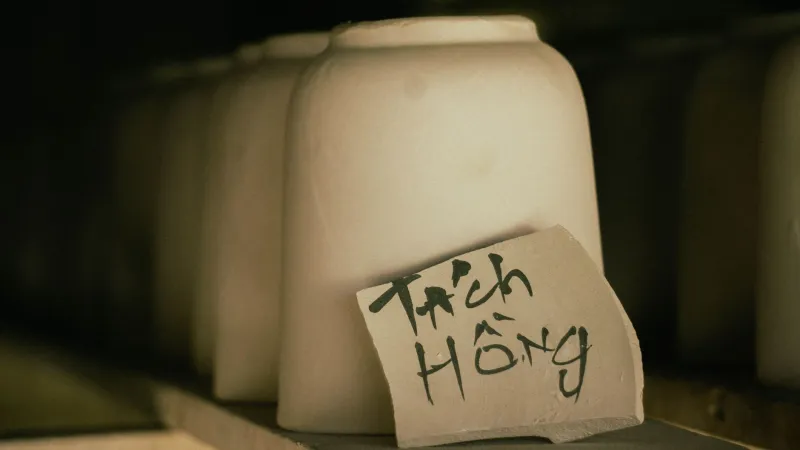
Take ceramicist Mei Lin Tran, a second-generation Vietnamese American based in Oakland who started hand-throwing pottery using techniques her grandmother practiced in Hội An. Tran spent years treating her craft as a weekend hobby while working a corporate job. Then she posted a single video on TikTok showing the process of making a traditional-style rice bowl — glaze, kiln, imperfections and all — and it hit 800,000 views overnight.
"People kept saying it felt meditative just to watch," Tran says. "But what surprised me was how many people wanted to own something made that way. Like they were hungry for the slowness of it."
She launched a small-batch collection the following month. It sold out in four hours. She hasn't looked back.
The Craft Itself Is the Story
What separates this wave of makers from, say, a generic handmade goods seller on Etsy is the depth of the story embedded in the work. These artists aren't just producing pretty objects — they're transmitting cultural knowledge through every piece, and consumers, especially younger ones, can feel the difference.
Jasper Kwon grew up watching his Korean grandmother practice maedeup, the intricate art of decorative knotting that dates back centuries. He's now based in Chicago, running a studio that reimagines maedeup knots as sculptural jewelry and wall installations — pieces that have landed in boutiques in Soho and been featured in interior design publications.
"I was always told that maedeup was dying out," Kwon says. "But I think it was just waiting for a different context. When you put it in a gallery or on someone's wrist instead of a museum case, people see it completely differently."
His pieces start at $180 and scale into the thousands for custom installations. Last year, he crossed $200,000 in revenue. He also teaches workshops — both in person and online — where he's found that the demand isn't just from Korean Americans reconnecting with heritage. It's from everyone.
Digital Platforms as Cultural Amplifiers
If there's one thing this generation has figured out that previous ones couldn't, it's how to use digital platforms not just for sales, but for education and community-building. Instagram, YouTube, and TikTok have become the new village square — places where craft knowledge that once passed quietly from elder to child can now reach millions.
Sana Patel, a first-generation Indian American textile artist in Austin, has built a following of over 300,000 on Instagram documenting her work with bandhani — a form of tie-dye rooted in Gujarat that produces intricate, jewel-like patterns. She sells finished scarves and fabric lengths, but her real growth came when she started sharing the process: the hours of hand-tying tiny fabric bunches before a single drop of dye is applied.
"People in India have been doing this for generations and it's not exotic to them," Patel says. "But here, showing someone that a single scarf takes three days to make by hand — that changes how they see what they're buying."
Her scarves sell for $120 to $350. She has a waitlist. She's also partnered with a sustainable fashion brand on a limited capsule collection that sold out in under 48 hours.
Authenticity Isn't a Marketing Strategy — It's the Foundation
One thing these makers are clear about: they're not using culture as a costume. The line between genuine cultural expression and trend-chasing appropriation is something they think about constantly, and it shapes every business decision.
Tran, for instance, refuses to mass-produce. "The moment I outsource the throwing and just slap my name on it, the whole thing falls apart," she says. "The point is that I made it. The point is that my grandmother taught me what she knew, and I'm keeping that chain going."
Kwon echoes this. He's turned down licensing deals that would have put his knotting patterns on fast-fashion accessories. "That's not the business I'm building. I want people to understand what they're holding."
This commitment to integrity isn't just idealistic — it's also smart business. In a market flooded with mass-produced goods, handmade work with a genuine cultural lineage carries a value that's genuinely hard to replicate.
What the Next Chapter Looks Like
The makers leading this movement aren't operating in isolation. Across the country, collectives and co-ops are forming — spaces where Asian American artisans can share resources, cross-pollinate ideas, and collectively push back against the pressure to dilute their work for mainstream appeal.
In the San Francisco Bay Area, a loosely organized group of Japanese American textile artists, ceramicists, and woodworkers have been hosting pop-ups that function more like cultural salons than craft fairs — complete with food, conversation about heritage, and live demonstrations. The events sell out. Waiting lists form.
What's emerging isn't just a business trend. It's a cultural reclamation — a generation saying, quietly but firmly, that the knowledge passed down through family lines has real worth. That it doesn't need to be simplified or stripped of context to find an audience. That, in fact, the depth is the appeal.
For the makers of the remix generation, the old ways and the new world aren't in conflict. They're in conversation. And that conversation, it turns out, is exactly what people are willing to pay for.