Glow Different: What Asian Skincare Actually Gets Right (And Why Dermatologists Are Finally Paying Attention)
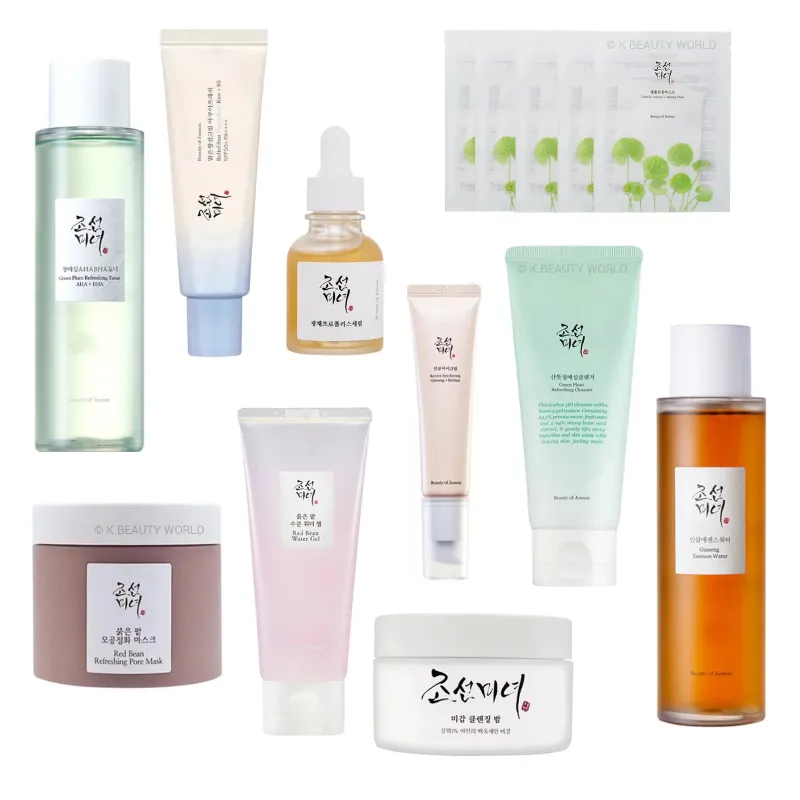
Photo: Asian skincare products flatlay K-beauty routine serums, via kbeautyworld.com
The Shelf Is Getting Crowded for a Reason
Walk into any Target or Sephora these days and you'll find an entire aisle that would've looked completely foreign to American shoppers a decade ago. Centella asiatica. Fermented rice water. Snail secretion filtrate. Products with 15-step routine guides tucked into the box. What was once the exclusive territory of Asian beauty forums and import websites is now firmly planted in the American mainstream — and dermatologists across the country are starting to weigh in on why that's actually a good thing.
K-beauty sparked the initial wave, but the story is bigger than Korea. Japanese skincare philosophy, Chinese herbal medicine principles, and Taiwanese cosmetic innovation are all part of a broader Asian beauty tradition that has been quietly influencing global skin health for generations. The question isn't just what these routines do — it's why they work, and what American beauty culture is only now beginning to understand.
Prevention Over Correction: A Completely Different Mindset
Here's the thing that separates Asian skincare from the Western approach at a philosophical level: the goal isn't to fix a problem. It's to make sure the problem never shows up in the first place.
American beauty culture has historically been reactive. Breakout? Spot treat it. Wrinkles? Find a filler. Hyperpigmentation? Reach for a corrector. Asian skincare traditions — particularly those rooted in Korean and Japanese practice — operate from the assumption that consistent, gentle daily maintenance is worth infinitely more than any emergency intervention.
Dermatologist Dr. Shereene Idriss, who has spoken publicly about K-beauty's influence on her practice, has noted that many of her patients who follow multi-step Asian-inspired routines show up with measurably better skin barrier function. That's not a coincidence. The emphasis on hydration layering, sun protection as a daily non-negotiable, and low-irritation formulas all align with what modern dermatology increasingly recommends.
SPF, in particular, is where the cultural gap becomes most visible. In Korea and Japan, daily sunscreen use has been normalized for decades — not as a beach-day add-on, but as the single most important anti-aging step in any routine. American dermatologists have been saying this for years. Asian skincare culture just built an entire product ecosystem around making it easy and enjoyable to actually follow through.
The Ingredients Worth Knowing
Not everything on a Korean beauty ingredient list is backed by a clinical trial, and that's worth being honest about. But a surprising number of the heavy hitters have legitimate science behind them.
Niacinamide — a form of Vitamin B3 that's been central to Asian skincare formulations for years — is now one of the most studied skincare actives in dermatological literature. It visibly reduces pore appearance, helps regulate sebum, and addresses uneven skin tone. Western brands have essentially reverse-engineered it into their own lines after watching Asian beauty consumers swear by it for a decade.
Centella asiatica, the plant extract known in Korean beauty circles as cica, has strong anti-inflammatory properties and accelerates wound healing. It's been used in traditional Asian medicine for centuries, and modern research confirms it's genuinely useful for sensitive or compromised skin.
Fermented ingredients are where things get interesting. Korean beauty brands pioneered the use of fermented yeast extracts and fermented botanical ingredients, arguing that the fermentation process breaks down molecules into smaller particles that penetrate the skin more effectively. Some clinical evidence supports this — fermented formulas can show enhanced bioavailability compared to their unfermented counterparts.
Then there's snail mucin, the ingredient that launched a thousand skeptical eyebrows. It sounds gimmicky, but it contains glycoproteins, hyaluronic acid, and glycolic acid — a combination that genuinely supports skin repair and hydration. Dermatologists who initially dismissed it have increasingly come around after seeing patient results.
That said, not every exotic-sounding ingredient is a breakthrough. The beauty industry — Asian and Western alike — is not immune to marketing hype. Gold-infused serums and placenta extracts make for great packaging copy but thin clinical dossiers. Approach with curiosity, not blind faith.
The Multi-Step Routine: Is It Really Necessary?
The famous 10-step Korean skincare routine became something of a cultural phenomenon in the US, inspiring both devotion and mild panic. Do you actually need to apply ten products every morning before work?
Honestly? No. And most Korean skincare practitioners will tell you that themselves.
The multi-step philosophy is less about the number of products and more about the sequence and function of each step. The idea is to layer products from thinnest to thickest consistency, allowing each layer to absorb before the next is applied. A basic version — oil cleanser, water-based cleanser, toner, essence, moisturizer, SPF — is already more thoughtful than the single-step cleanse-and-go routine many Americans grew up with.
What the multi-step format gets right is attention. It turns skincare into a deliberate practice rather than an afterthought. And that intentionality — taking two minutes to actually understand what you're putting on your face and why — tends to produce better long-term outcomes regardless of the specific products involved.
Beyond Korea: Japan, China, and the Broader Tradition
K-beauty gets most of the headlines in American media, but it's worth expanding the frame. Japanese skincare has its own deeply developed philosophy centered on mochi hada — the ideal of plump, bouncy, almost rice-cake-smooth skin. Japanese brands like Hada Labo, SK-II, and DHC have cultivated cult followings in the US for good reason. Their formulations tend toward minimalism and precision, with hyaluronic acid concentrations and cleansing oils that perform as advertised.
Traditional Chinese skincare draws heavily on herbal medicine principles — ingredients like goji berry, pearl powder, and ginseng have been used for skin health for centuries, and some are now being studied for their antioxidant and anti-inflammatory properties.
Taiwanese beauty brands have also been quietly building American audiences, particularly in the sheet mask and essence categories.
The broader point is that Asian beauty wisdom isn't a monolith. It's a diverse collection of cultural traditions that share a few core values: respect for the skin barrier, patience as a virtue, and the belief that beautiful skin is something you cultivate over years, not something you buy in a single bottle.
What to Actually Try First
If you're new to this world, start simple. A double cleanse (oil cleanser followed by a gentle foaming wash) will change how clean your skin feels overnight. Add a hydrating toner — not the astringent kind, but something lightweight that preps your skin to absorb what comes next. Find a daily SPF you actually enjoy wearing. That alone puts you ahead of most Western routines.
From there, experiment with one active at a time. Niacinamide is a low-risk starting point. A good hyaluronic acid serum is hard to mess up. Give things at least four to six weeks before judging results — another principle Asian skincare culture gets right that American instant-gratification culture tends to resist.
Your dermatologist might actually be impressed.