Roots and Blueprints: How Asian American Communities Are Reinventing the American Neighborhood
Drive through the Eden Center in Falls Church, Virginia on a Saturday morning and you'll find something that doesn't quite fit the usual American strip mall template. Yes, there are parking lots and storefronts. But there's also the smell of phở drifting out of a dozen different restaurants, a crowd that spans three generations speaking a mix of Vietnamese and English, a bakery with a line out the door, and a palpable sense that this particular stretch of Northern Virginia belongs to the people who built it.
The Eden Center is one of the oldest examples of something that is now happening with increasing intention and sophistication across the United States: Asian American communities not just occupying space, but actively designing it — shaping neighborhoods that reflect who they are, what they value, and what they want to pass on.
This isn't nostalgia. It's architecture. And it's becoming one of the most interesting stories in American urban development.
From Ethnic Enclave to Cultural District
The old model of the ethnic enclave — a cluster of immigrant-owned businesses that served a specific community and was largely invisible to the broader city around it — is being replaced by something more ambitious and more outward-facing.
In Houston, the Midtown area has seen a deliberate push to formalize the city's Asian cultural presence through mixed-use development that integrates residential space, cultural programming, and commercial activity. In Los Angeles, Little Tokyo has been fighting — and largely winning — a decades-long battle to preserve its identity against gentrification pressure, developing community land trusts and cultural heritage designations that give residents actual legal tools to protect what they've built.
In the Twin Cities, Hmong American community leaders have been instrumental in shaping development along University Avenue in Saint Paul, ensuring that as the Green Line light rail corridor attracted investment, Hmong-owned businesses and cultural institutions weren't simply displaced by rising rents.
What connects these efforts is intentionality. These aren't communities reacting to development — they're initiating it, shaping it, and in many cases funding it through community-based economic models that keep ownership local.
The Co-Housing Experiment
One of the most genuinely novel developments in this space is the emergence of co-housing and intentional community projects specifically designed around Asian American cultural values.
Co-housing — a model where residents maintain private homes but share common spaces and resources — has existed in the US since the 1980s, mostly in predominantly white, progressive communities. But a new wave of projects is adapting the model to reflect the multigenerational household structures and community interdependence that are central to many Asian cultures.
In the Bay Area, a group of Filipino American families has been developing a co-housing project explicitly designed around the concept of bayanihan — a Tagalog term for communal unity and collective effort. The design includes a large shared kitchen suitable for the kind of large-scale cooking that marks Filipino celebrations, a community garden, and flexible common spaces that can accommodate extended family gatherings.
"We wanted to build something that didn't force us to choose between living like Americans and living like Filipinos," says one of the project's organizers, a second-generation Filipino American architect based in Oakland. "The mainstream housing market basically gives you one template. We wanted to write our own."
Similar projects are taking shape in the Korean American communities of New Jersey and the South Asian American corridors of suburban Chicago — each adapting the co-housing framework to the specific cultural logics of their communities.
What These Spaces Actually Look Like
It would be a mistake to think of these developments as simply ethnic neighborhoods with better branding. What's emerging is something more complex and more interesting than that.
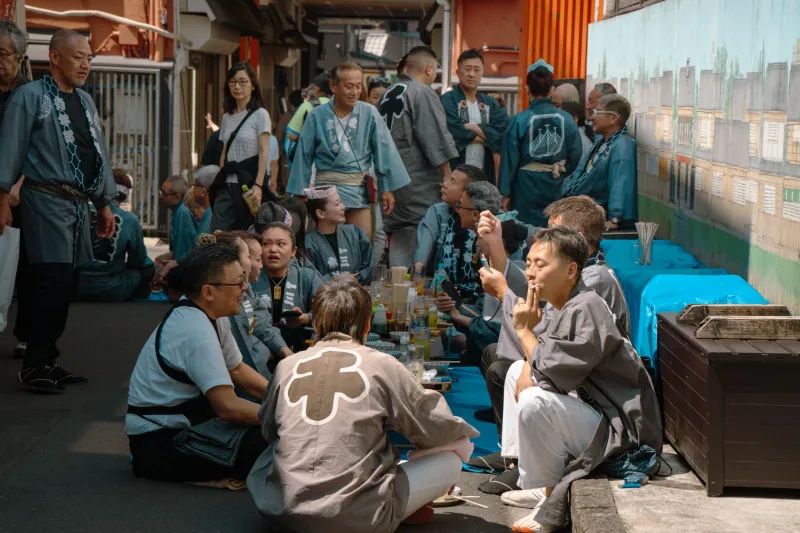
The most successful of these spaces are designed to be porous — welcoming to outsiders without losing their core identity. They're places where a non-Asian visitor can eat excellent food, attend a cultural festival, or take a language class, while the community's actual residents are experiencing something much deeper: a neighborhood that was built with them in mind.
This means design choices that reflect cultural values. Wider sidewalks and communal gathering areas that accommodate the kind of outdoor socializing common in many Asian cultures. Ground-floor commercial spaces sized and priced for small, family-owned businesses rather than chain retailers. Community centers that host everything from ESL classes to traditional arts instruction to senior programming.
It also means economic structures that resist displacement. Community land trusts, cooperative ownership models, and local investment funds are being used to ensure that as these neighborhoods become more desirable — as they inevitably do — the communities that built them aren't priced out of them.
The Blueprint Goes Mainstream
Here's the part that might surprise you: urban planners, developers, and city governments across the US are starting to look at these Asian American community-building efforts as models for broader neighborhood development.
The reasons are practical as much as they are ideological. Neighborhoods with strong cultural identities tend to be economically resilient. They attract tourism and foot traffic. They maintain social cohesion in ways that generic mixed-use developments often don't. And they do it without requiring massive public subsidy — because community investment fills gaps that public funding can't.
Cities like Seattle, San Francisco, and New York have all developed formal programs to support cultural district development, and Asian American communities have been among the most active participants in shaping what those programs look like.
At the same time, the model is influencing other communities. African American, Latino, and Indigenous community developers are in active conversation with Asian American counterparts, sharing strategies for land trust development, cultural preservation, and community-controlled economic development.
Why It Matters Right Now
There's a broader context here that's impossible to ignore. Asian American communities across the US have faced a painful few years — a surge in anti-Asian violence, persistent questions about belonging, and a political climate that has at various points treated Asian Americans as perpetual foreigners regardless of how many generations their families have been here.
Against that backdrop, the act of building — of physically shaping American space and saying we are here, we are staying, and this is what we're creating — carries a meaning that goes beyond urban planning.
These neighborhoods are arguments, made in brick and mortar and community gardens and shared kitchens, about what Asian American belonging in the United States actually looks like. Not assimilation into an existing template. Not isolation in an enclave. Something more dynamic than either: communities that are fully American and fully themselves at the same time.
That's not just a blueprint for a neighborhood. It's a blueprint for a different kind of American story. And if the energy in these communities is any indication, they're just getting started.