Slow Down to Level Up: How Asian Americans Are Turning Time Into Their Secret Weapon
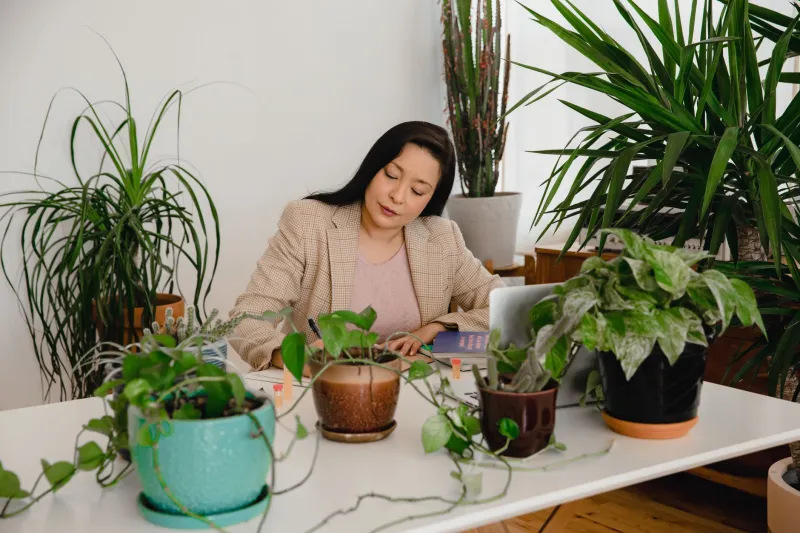
Somewhere between the fourth Slack notification before 8 a.m. and the third 'quick sync' that could've been an email, Priya Nair hit a wall. The Chicago-based UX designer had spent three years grinding through sixty-hour weeks, convinced that visible busyness was the price of professional respect. Then her grandmother visited from Kerala and watched her eat lunch over a keyboard.
"She didn't say anything harsh," Priya recalls. "She just looked at me and said, 'You're eating like you're being chased.' That landed differently than any burnout article ever did."
That single observation sent Priya down a rabbit hole — not into productivity apps or motivational podcasts, but into something older and quieter: the time philosophies baked into her own cultural inheritance. What she found there changed how she works, sleeps, and, yes, eats lunch.
She's far from alone.
The Hustle Hangover Is Real
For decades, the dominant career narrative sold to ambitious Americans — Asian Americans very much included — was a simple equation: more hours equals more success. The model fit neatly onto a generation of immigrant families who genuinely did work around the clock to build footholds in a new country. Hard work wasn't just a strategy; it was survival.
But something shifted. Therapists, coaches, and community organizers across major U.S. cities are noticing a generational correction happening in real time. Second- and third-generation Asian Americans, many of whom watched their parents burn through health and relationships in service of that equation, are asking a harder question: what if the math was always wrong?
"My clients aren't lazy," says Jess Tanaka, a career coach based in Seattle who works primarily with Asian American professionals in tech. "They're exhausted from performing productivity. There's a difference. Performing busyness and actually generating value are two completely different activities, and a lot of people are finally willing to admit that."
What 'Ma' Actually Means for Your Calendar
In Japanese aesthetics, ma (間) refers to the meaningful pause — the intentional empty space between sounds, objects, or actions that gives everything around it definition. It's why a single branch in an ikebana arrangement hits harder than a bouquet. The emptiness isn't absence. It's architecture.
Applied to time, ma becomes a radical act in American work culture. Kevin Lim, a product manager in San Francisco, started scheduling what he calls 'ma blocks' — fifteen to thirty minute gaps between meetings where he does absolutely nothing task-related. No email. No scrolling. Sometimes he makes tea. Sometimes he just sits.
"My coworkers thought I was joking when I first mentioned it," Kevin says with a laugh. "But my output in the meetings that follow those blocks is noticeably sharper. I come in with actual thoughts instead of just reacting."
He's backed by more than anecdote. Research on cognitive restoration consistently shows that the brain consolidates information and generates creative connections during periods of low stimulation — what neuroscientists sometimes call the default mode network kicking in. The ancient Japanese concept and the modern neuroscience are, it turns out, describing the same thing.
Ayurveda Didn't Know About Zoom, But It Knew About You
On the other side of the continent, Meera Krishnamurthy is restructuring her entire workday around a framework that's roughly five thousand years old. The Brooklyn-based freelance consultant started studying Ayurvedic daily rhythms — called dinacharya — after a particularly brutal product launch left her with adrenal fatigue and a prescription for something she'd rather not be taking long-term.
Ayurveda divides the day into segments governed by different energetic qualities. The early morning hours (roughly 6–10 a.m.) are associated with kapha — steady, grounded energy ideal for planning and creative work. Midday through early afternoon carries pitta energy — sharp, focused, perfect for analytical tasks and difficult conversations. Late afternoon into evening brings vata — lighter, more scattered, better suited to brainstorming or wrapping up than starting anything new.
"I stopped scheduling strategy calls after 3 p.m.," Meera explains. "Not because I read some LinkedIn post about it, but because Ayurveda told me my mind would be less precise then — and honestly, my lived experience confirmed it completely."
She maps her most cognitively demanding client work to the morning kapha window, reserves afternoon for administrative tasks, and protects her evenings almost entirely. Her billable hours dropped slightly. Her client satisfaction scores went up noticeably.
Time-Blocking With Cultural Roots
What makes this movement distinct from the generic productivity-influencer space is the source material. These aren't people downloading a new app or following a Silicon Valley framework cooked up last Tuesday. They're reaching back into traditions that were specifically designed around sustainable human rhythm — traditions that, for many Asian Americans, come pre-loaded with personal and ancestral meaning.
That emotional resonance matters. Jess Tanaka sees it in her coaching sessions regularly. "When I suggest time-blocking to a client using generic productivity language, I get polite resistance," she says. "When we connect it to something their grandmother practiced, or a concept from their family's cultural background, there's a completely different level of buy-in. It becomes identity, not just technique."
The strategies vary widely depending on cultural background. Some practitioners lean into the Korean concept of nunchi — a hyper-attuned social awareness — to read when a workday is genuinely done versus when guilt is manufacturing extra hours. Others draw on Chinese medicine's organ clock, which assigns different physiological functions to different hours, to time exercise, eating, and focused work accordingly.
The through line isn't any single system. It's the shared rejection of time as something to be conquered and filled, in favor of time as something to be read and respected.
What Gets Reclaimed
Priya eventually redesigned her entire work schedule around Ayurvedic principles, blocking her most complex design work for early mornings and building in a genuine, screen-free lunch break — something that felt almost rebellious the first few times she did it.
Six months in, she got a promotion.
"My manager said I seemed more present in meetings," she says. "Which is funny, because I was technically working fewer hours. But I was actually there when I was there."
That distinction — being actually present versus technically available — might be the core of what this whole shift is about. In a culture that has historically rewarded Asian Americans for quiet endurance and maximum output, claiming the right to work with your own natural rhythms instead of against them is quietly radical.
It's not about doing less for the sake of it. It's about recognizing that the quality of an hour depends entirely on what you bring to it — and that you can't bring much when you're running on empty.
Your time isn't just a resource. According to people like Priya, Kevin, and Meera, it's the whole game. And the ancient playbook? Still pretty undefeated.