Before the Skyline Changes: 6 Photographers Racing to Save the Visual Memory of America's Asian Enclaves
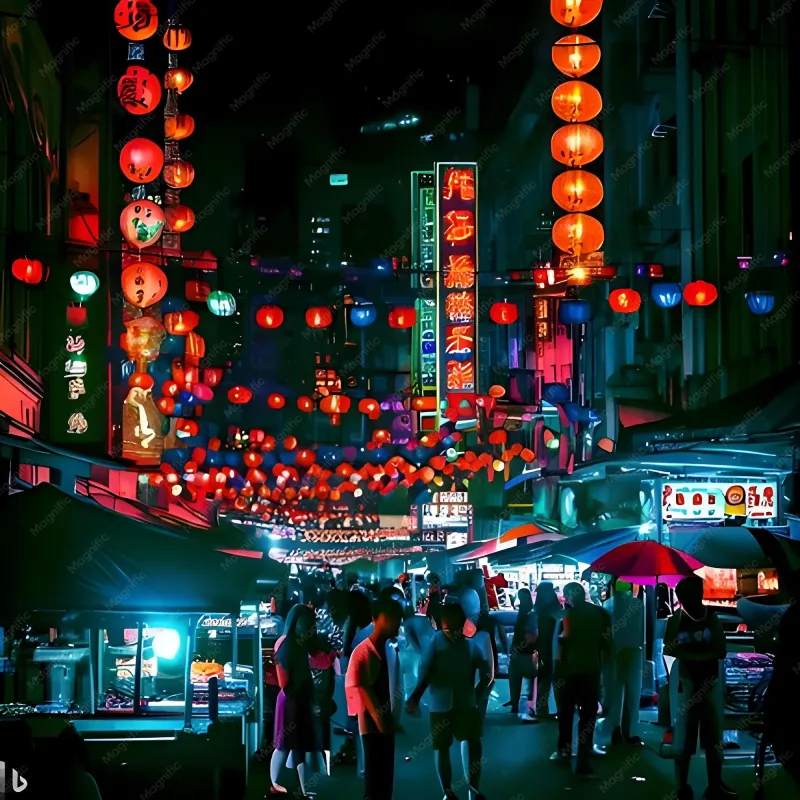
Photo: photographer taking pictures in Chinatown street at dusk neon signs, via img.freepik.com
A neighborhood can vanish in two ways. There's the obvious one — demolition, rent hikes, a banner announcing luxury condos. And then there's the slower erosion: the bakery that closes because no one in the family wants it, the sign that comes down in Vietnamese and goes up in English, the regulars who move to the suburbs one by one until the block forgets what it was.
Photographers across the country have appointed themselves witnesses to both. Their work is urgent, gorgeous, and increasingly the only comprehensive visual record some of these streets will ever have. Here are six of them — and where to find their work before it ends up in a museum instead of your hands.
1. The Chinatown Night Walker — Corky Lee's Heirs, New York City
New York's Chinatown has been photographed for over a century, but the current generation of shooters there carries a specific anxiety: the neighborhood survived 9/11's economic blow and 2020's scapegoating, only to face the slowest, most effective threat yet — rising rents and a shrinking elderly population. Photographers working the Manhattan and Sunset Park enclaves today shoot with archival intent, documenting senior centers, fish markets, and the hand-painted signage that's disappearing one repainting at a time. Look for zines from indie presses like Chinatown-based collectives at the Museum of Chinese in America's shop — small runs, fast sellouts, worth grabbing.
2. Little Saigon's Golden Hour — Orange County, California
Westminster's Little Saigon is the largest Vietnamese enclave in the country, and its photographers tend to work the edges of the day — dawn at the pho shops, dusk at the strip malls lit up like casinos. The best of this work refuses nostalgia: yes, there are portraits of elders and bánh mì counters, but also nail salons at closing time, young people inmodified cars in the parking lots, the enclave as a living thing rather than a postcard. Keep an eye on the annual exhibitions around the Vietnamese American arts scene in the OC, and photo books released through small Southern California presses.
3. Koreatown After Hours — Los Angeles
LA's Koreatown is a 24-hour city, and its best documentarians work like it — shooting the karaoke blocks at 2 a.m., the churches in converted office buildings, the grandmothers who run the same tofu house for thirty years. This work doubles as a record of one of the most densely packed, rapidly changing neighborhoods in America, where Koreatown's borders are less a line than a debate. The photo-book scene here is strong; check the inventory at K-town's independent bookshops and the Korean American museum's programming calendar.
4. The Hometown That Moved — Houston's Chinatown and Asiatown
Houston's Asian districts have a different rhythm than the coastal enclaves — sprawling, car-shaped, strung along Bellaire Boulevard rather than compressed into walkable blocks. Photographers here face a strange challenge: how do you document a Chinatown that looks like an office park? The answer, in the best work, is people. Family portraits in banquet halls, quinceañera-meets-lunar-new-year event halls, the noodle factories at dawn. It's a reminder that "enclave" in America means a dozen different geometries.
5. Philadelphia's Washington Avenue — The Last Days of a Corridor
Philadelphia's Southeast Asian commercial corridor on Washington Avenue has been the subject of one of the most consequential preservation fights in recent memory — a zoning battle that pitted longtime immigrant businesses against residential development. Photographers embedded in that fight produced some of the most politically pointed enclave documentation in the country: storefronts as evidence, portraits as testimony. Community archives and zines from the fight are still circulating and still worth your money.
6. The South Asian Bazaaries of Devon Avenue — Chicago
Chicago's Devon Avenue gets less attention than the coasts, which is exactly why its documentarians matter. Indian, Pakistani, and Bangladeshi Chicagoans have kept this corridor alive for decades, and its photographers capture a texture — sari shops, halal butchers, the Indian sweets stores at Diwali — that most Americans have never seen framed. Regional university presses and Chicago-based South Asian arts organizations are the places to find this work.
What Happens When the Photos Are All That's Left?
Here's the question that haunts all of this work. A photograph can preserve a storefront, but not a landlord's price. It can save a face, but not a block's rent. Visual records are necessary, and they are not sufficient.
The photographers themselves tend to be clear-eyed about it. Their work, they'll tell you, isn't a substitute for policy, tenant organizing, or affordable commercial space. It's a companion to it — proof of what's at stake, delivered at a scale a city council meeting can't match.
So support them the way you'd support any working artist: buy the zine, attend the exhibit, share the portrait with credit. Every purchase is a small vote that these neighborhoods were here, mattered, and deserved better than a before-and-after slideshow.
The golden hour doesn't last. That's what makes it golden — and what makes the people who chase it worth following.